
Blog ·
Cousin marriage: everyone’s, not just royalty’s
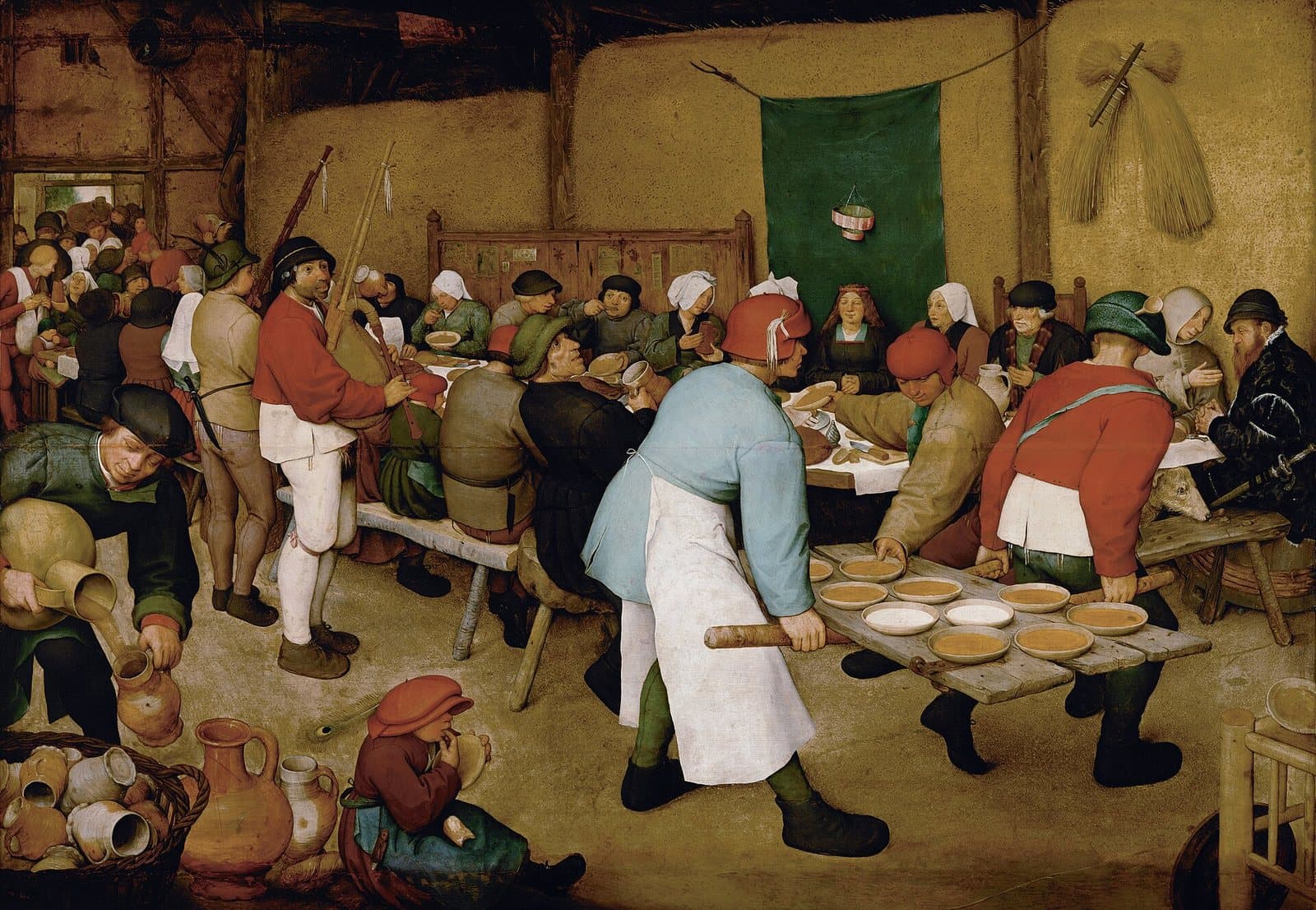
Mention cousin marriage and most people picture the Habsburg jaw, or Charles Darwin fretting about his children’s health, or a joke about some rural backwater. It reads as an aberration, something royalty did for political reasons and the rest of us wisely avoided.
The numbers tell a different story. For nearly all of human history, marrying a cousin was not the exception but the norm, and not because people were careless about it. It was the mathematically unavoidable result of how people lived. Your ancestors did it, over and over, and the modern aversion to it is a historical novelty barely two centuries old.
The arithmetic of a village
Picture a European village in 1700. It has perhaps 400 people. The next village is five miles away over a bad road, and the one beyond that might as well be in another country. People marry whom they can walk to. Within that village, every family has been intermarrying with every other family for generations, because there is no one else.
Now count cousins. You have, on average, something like 4 first cousins of marriageable age, 16 second cousins, 60 third cousins, and over 200 fourth cousins, given typical historical family sizes. In a village of 400, your fourth cousins are most of the village. Pick a spouse at random from the eligible pool and you will almost certainly marry someone who shares a great-great-great-grandparent with you, and quite possibly closer.
Studies of parish registers bear this out. In rural England, France, and Germany before 1850, the average married couple was related at about the level of fifth or sixth cousins, and marriages between second and third cousins were common enough that nobody remarked on them. In more isolated communities, mountain valleys, islands, and religious enclaves, first and second cousin marriages ran at 10 to 30 percent of all unions.
What the Church allowed, and why it mattered
The medieval Catholic Church took an unusually strict line. From the eleventh century it prohibited marriage within seven degrees of kinship, which under the Church’s method of counting reached out to sixth cousins. This was unenforceable, since almost nobody in a village could marry anyone under such a rule, and in 1215 the Fourth Lateran Council cut it to four degrees, or third cousins.
Even that was routinely dispensed. A couple who were second cousins applied for a dispensation, paid a fee, and married. The surviving dispensation records are a gold mine for genealogists precisely because they document the kinship the Church was supposed to be preventing. Thousands of them exist for ordinary farmers and tradesmen, not just nobles.
Protestant regions dropped the cousin prohibitions almost entirely after the Reformation. In England, first cousin marriage has been legal continuously since 1540, when Henry VIII had it permitted so he could marry Catherine Howard, cousin of Anne Boleyn.
The royals were just more visible
The Habsburgs are the famous case. Charles II of Spain, who died in 1700, had a coefficient of inbreeding higher than the child of a brother and sister, the result of generations of uncle-niece and first-cousin marriages. He was sterile, epileptic, and died at 38, ending the Spanish line. Queen Victoria married her first cousin Albert. Their descendants married each other across Europe for the next century.
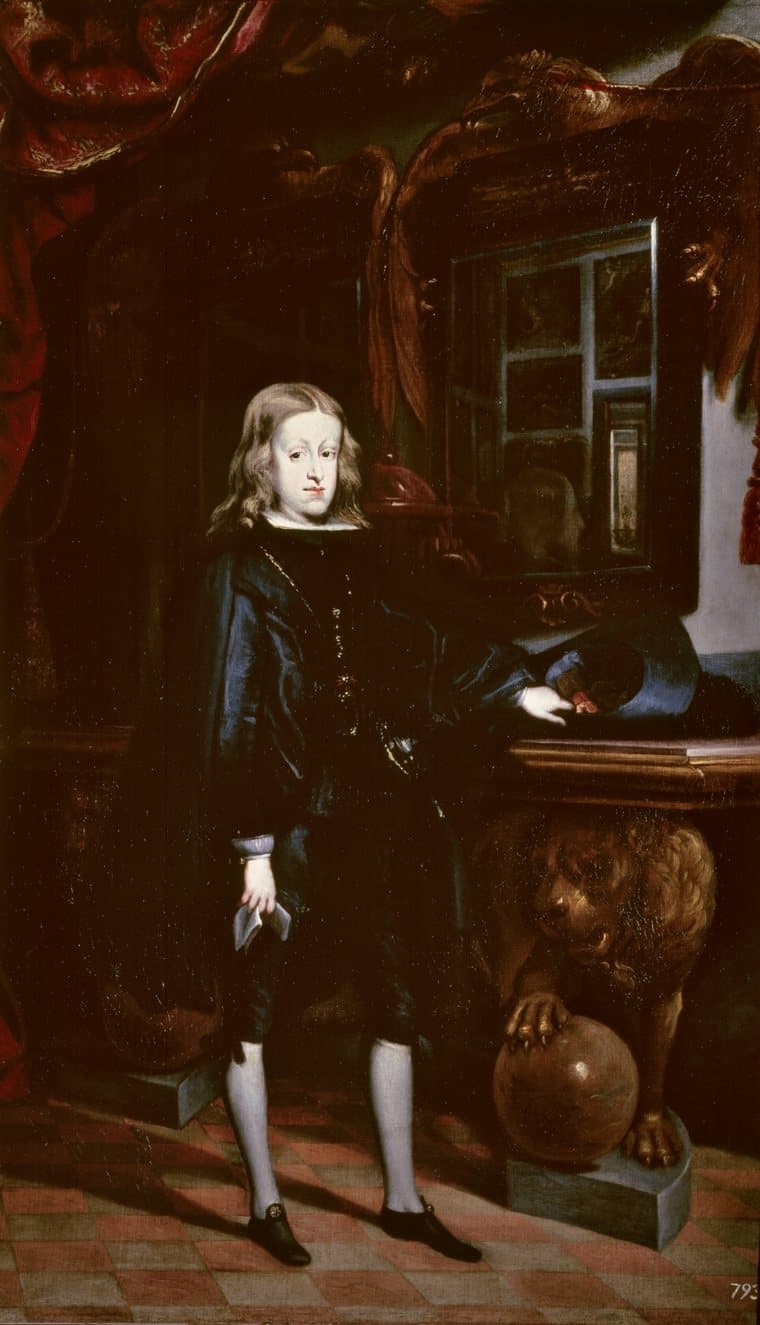
What made royalty different was not that they married cousins but that they did it in a small, closed pool, repeatedly, and that the kinship was close. The village peasant married a fourth cousin from a pool of a few hundred families with a lot of genetic churn. The Habsburg married a first cousin from a pool of a dozen families that had been doing the same for two hundred years. The first is harmless. The second accumulated. Royal cousin marriage is remembered because it was extreme and documented, not because it was unique.
When it stopped
The decline in cousin marriage in Western countries tracks a single thing: mobility. Railways in the mid-1800s, mass migration to cities, compulsory schooling that mixed children from different parishes, and later the bicycle and the automobile, all expanded the pool of people a young adult might meet. Studies of French and English populations show the rate of cousin marriage falling steadily from about 1850 and collapsing after 1900.
The social stigma followed the decline rather than causing it. In the 1860s a few American states began banning first-cousin marriage, partly from a mistaken reading of new ideas about heredity. Today about half of U.S. states prohibit it, while it remains legal in all of Europe, Canada, and most of the world. Globally, around 10 percent of marriages are still between second cousins or closer, concentrated in the Middle East, North Africa, and South Asia, where it remains a normal choice.
What the risk actually is
The genetic concern is real but smaller than folklore suggests. Children of first cousins have a risk of serious birth defects or genetic disorders roughly 1.7 to 2.8 percentage points higher than the general population, so about 4 to 6 percent against a baseline of 2 to 3. That is comparable to the added risk of a mother being over 40. For second cousins the added risk is barely measurable. Where cousin marriage repeats generation after generation in a closed group, as it did for the Habsburgs, the risks compound. For a one-time cousin marriage in a large population, they do not.
Darwin, the worried cousin-marrier
Charles Darwin is the case that gave the modern anxiety its scientific gloss. He married his first cousin Emma Wedgwood in 1839, and the two families had intermarried before: Darwin’s mother was a Wedgwood too. Three of their ten children died young and several of the survivors were sickly, and Darwin, who was then developing his ideas about inbreeding in plants, worried for the rest of his life that he had harmed his own family. In 1870 he tried to get a question on cousin marriage added to the British census so the effect could be measured. Parliament refused, and his son George did the study privately, concluding that the harm, if any, was small.
Modern analyses of the Darwin-Wedgwood pedigree, by Berra, Alvarez, and Ceballos in 2010, found a modest but real level of inbreeding across the two families and a child mortality rate somewhat above the norm for their class. The Darwins, in other words, were a mild version of the Habsburg pattern: repeated cousin marriage across generations, not a single instance.
Why genealogists should care
Cousin marriage is not a curiosity. It is the engine of pedigree collapse, the mechanism by which your ancestral slots end up filled by the same people many times over. Every cousin marriage in your tree merges two branches. Over twenty generations, the merges are so numerous that your distinct ancestors number in the millions rather than the billions the doubling would predict.
So when you find a marriage between second cousins in your 1790 parish register, you have not found a scandal. You have found the ordinary workings of a world where people married the people they knew, which was nearly everyone within walking distance. Your ancestors were not aberrant. They were normal, and normal meant kin.
Sources
- Alvarez, G., Ceballos, F. C., and Quinteiro, C. (2009). “The Role of Inbreeding in the Extinction of a European Royal Dynasty.” PLoS ONE 4(4): e5174.
- Phys.org summary of Alvarez et al.
- National Geographic, “How inbreeding killed off a line of kings.”
- JSTOR Daily, “The Genetics of Cousin Marriage” (summarizing Bittles and Black’s risk estimates).
- Bittles, A. H. and Black, M. L., research on consanguinity and neonatal/childhood outcomes (Murdoch University repository).
- Science Media Centre NZ, “Marrying your cousin increases birth defect risk, but only slightly.”
- Consanguinity in canon law and the Fourth Lateran Council: Wikipedia and RootsWeb.
- Luebke, D. “Late Medieval Canon Law on Marriage” (University of Oregon course page).
- Berra, T. M., Alvarez, G., and Ceballos, F. C. (2010). “Was the Darwin/Wedgwood Dynasty Adversely Affected by Consanguinity?” BioScience 60(5). Print/journal reference.
Image credits
- Pieter Bruegel the Elder, The Peasant Wedding (c. 1567–68). Kunsthistorisches Museum, Vienna, via Google Art Project, Public domain.
- Juan Carreño de Miranda, Charles II of Spain (1673). Museo del Prado, Madrid, Public domain.

