
Blog ·
Are you descended from ancient Rome?
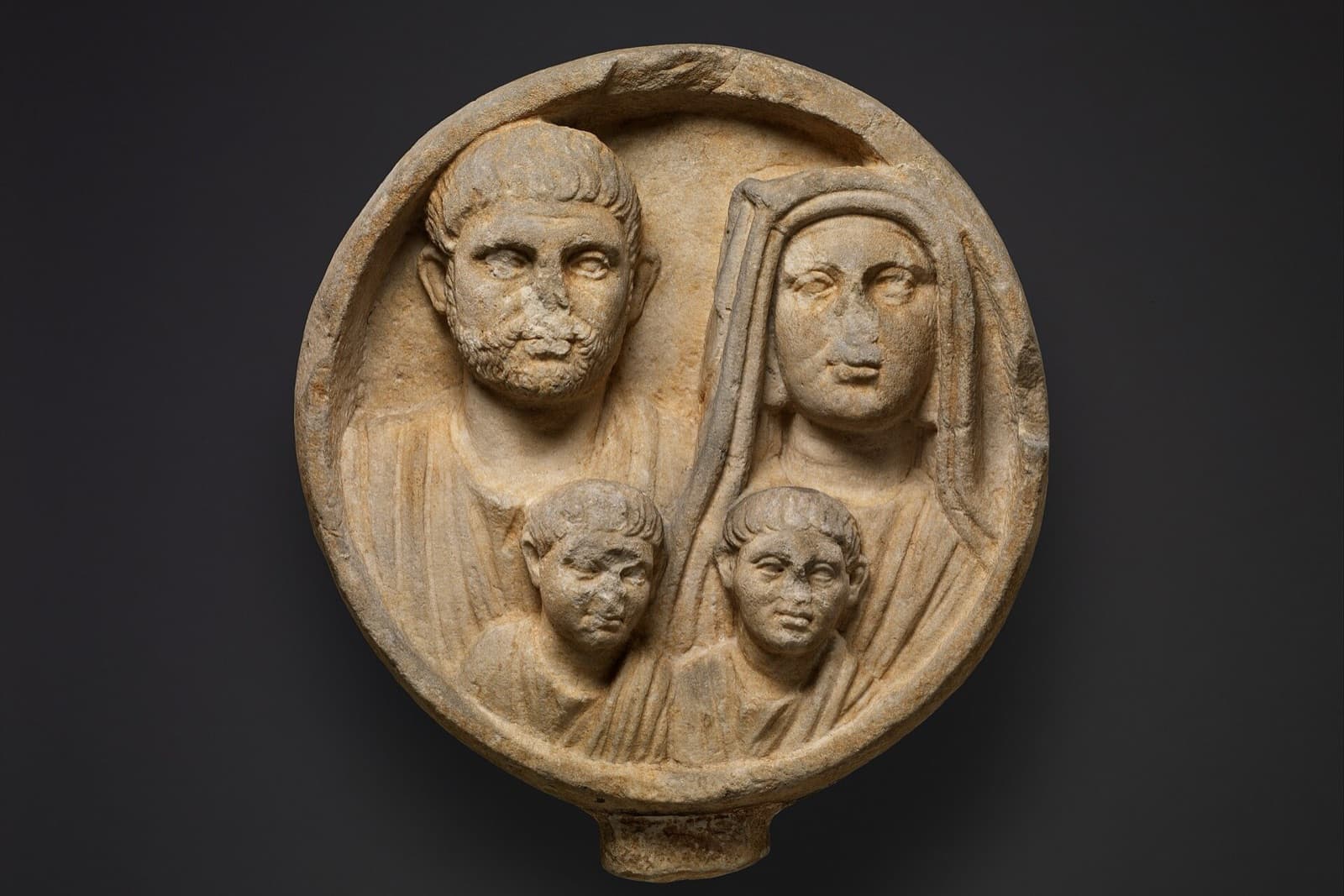
Every genealogist who sticks with the hobby long enough eventually asks the same question, usually late at night with a dozen browser tabs open: how far back can this actually go? Not to the 1600s, which feels attainable, but all the way. To the Rome of Caesar. To the Athens of Pericles. Is there a living person anywhere on earth who can draw a line, name by name, from themselves to a toga?
The answer is stranger than a simple yes or no. Documented, name by name, almost certainly not. Genetically and mathematically, yes, and not just for a lucky few. For most people with any European, Mediterranean, or Near Eastern ancestry, the answer is that you are descended from thousands of Romans and Greeks, including some whose names you learned in school. You just cannot prove which path leads to them.
The gap between those two answers is the whole story.
Where the paper trail ends
The documentary wall for most families stands somewhere between 1500 and 1700. That is when parish registers of baptisms, marriages, and burials begin in most of Europe, mandated by the Council of Trent in Catholic countries and by Thomas Cromwell in England in 1538. Before those registers, an ordinary farmer or craftsman left no record of his existence at all. He was born, worked, died, and nobody wrote it down.
Noble and gentry families push further back, because land ownership generates paper. Charters, deeds, inquisitions post mortem, and chronicles can carry a well-documented line into the 1000s, and a few into the 900s. Beyond that, the sources thin to almost nothing.
Then comes the real problem. The Western Roman Empire fell in 476. The earliest reliable medieval pedigrees begin around 900 to 1000. Between those dates lies roughly five centuries of near-total genealogical darkness. Literacy collapsed, records were not kept or did not survive, and the people who did get written about, kings and bishops mostly, were described in terms of office rather than parentage. A chronicler might tell you a Frankish noble was “of senatorial family” without naming a single senator.
So it is not that Romans left no records. Rome was a bureaucratic civilization that loved lists. The problem is the five-hundred-year gap in the middle of the chain, and no amount of research can conjure a baptismal register for a sixth-century Gaul.
The hunt for a “descent from antiquity”
Genealogists have a name for the holy grail: a descent from antiquity, or DFA. It means a continuous, documented chain of parent-to-child links from a living person back to someone attested in classical sources. Serious researchers have chased one for over a century, and the search has its own literature, journals, and factions.
Several candidate routes exist. None is accepted as proven.
- The Bagratid route. The Bagratuni dynasty of Armenia and later Georgia is documented from the 700s and survives through well-attested medieval marriages into European royalty. The weak link is the early stretch: Armenian chroniclers connected the Bagratids to Parthian and Persian nobility, but the links before about 750 rest on tradition rather than record. Most genealogists consider this the strongest candidate, which tells you how thin the field is.
- The Byzantine route. Several imperial families, the Komnenoi and Palaiologoi especially, married into Western houses. But the Byzantine aristocracy itself cannot be traced continuously back through the seventh-century crisis to the old Roman senatorial class.
- The Gallo-Roman route. Bishops and nobles in sixth-century Gaul came from Roman senatorial families, and Gregory of Tours names many of them. The trouble is connecting any of them forward to a Carolingian noble by actual parentage rather than by the vague phrase “of senatorial stock.”
- The Jewish exilarch route. The Exilarchs of Babylon claimed Davidic descent and are attested for centuries, but the chain to any living family has the same medieval gaps as everything else.
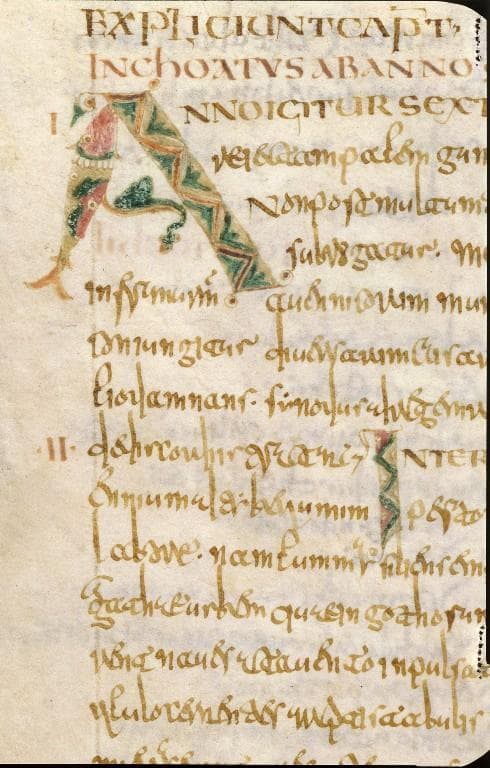
Each of these has at least one link where a medieval writer asserted a connection that nobody can verify. Some may well be true. None can be shown to be true, and in genealogy that is the only standard that counts.
Beware the invented pedigree
If proof is so scarce, why do so many published family trees reach Troy? Because for about a thousand years, claiming ancient ancestry was a political tool, and people paid good money for it.
Medieval and Renaissance Europe produced fake antique pedigrees on an industrial scale. The Franks claimed descent from the Trojans, borrowing the legend Rome had used about itself. The Habsburgs were given a line back to the Julii. The Welfs, the Este, the Visconti, and half the Italian nobility hired scholars to find them a Roman consul or a Greek hero. In England, Geoffrey of Monmouth’s History of the Kings of Britain supplied Brutus of Troy as the founder of the British, and families gladly attached themselves to the kings he invented.
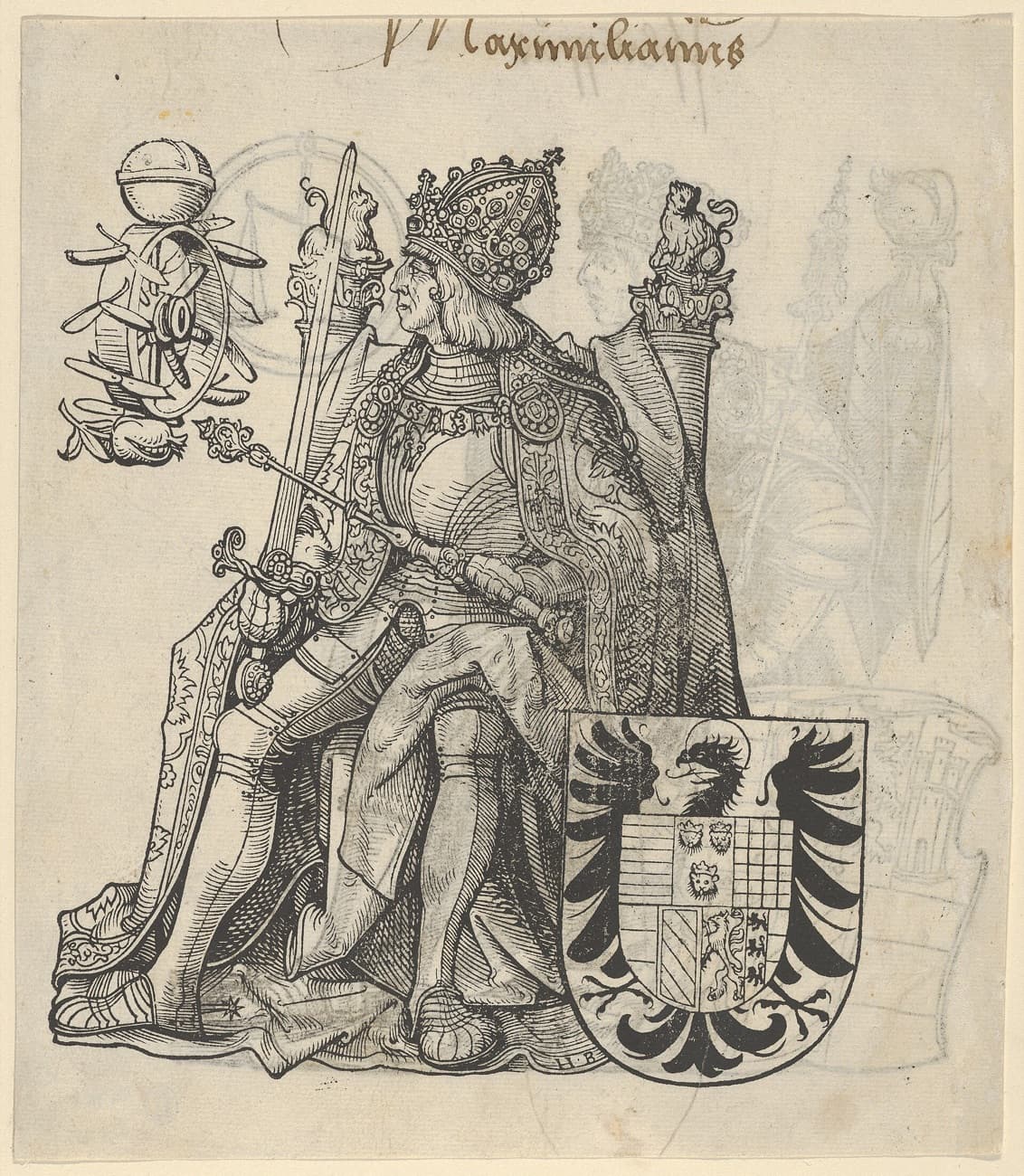
These fabrications did not vanish with the Enlightenment. They were copied into early printed peerages, then into Victorian county histories, then into twentieth-century compilations, and from there into the big online trees where one person’s upload becomes a thousand people’s “verified” ancestor. If your online tree shows a line through a Roman senator with suspiciously modern-sounding dates, you are almost certainly looking at a sixteenth-century forgery that has been laundered through five hundred years of copying.
What the math says
Now set the documents aside and do some arithmetic. Two thousand years is roughly 70 to 80 generations. You have two parents, four grandparents, eight great-grandparents, and so on. At 70 generations back, the number of ancestral “slots” in your tree is 2 to the 70th power, which is about a thousand billion billion. That is vastly more than the number of humans who have ever lived, let alone the number alive in the year 26.
The only way this works is that the same people fill many slots at once. Genealogists call it pedigree collapse. Your tree does not keep fanning out; it folds back on itself, with the same medieval peasant appearing in your ancestry hundreds or thousands of times through different routes.
In 1999 the statistician Joseph Chang modeled what this means for a population that mixes even modestly. His result, extended in a 2004 paper with Douglas Rohde and Steve Olson, is startling. For all living Europeans, the most recent common ancestor probably lived only about 1,000 years ago. Go back further and you reach what is called the identical ancestors point, roughly 2,000 to 3,000 years ago for a connected population like Europe and the Mediterranean. At that depth, everyone alive who left any descendants at all is an ancestor of everyone in the population today.
Read that again slowly. If any Roman or Greek alive in the first century has living descendants, those descendants include essentially every person of European, Mediterranean, or Near Eastern ancestry now walking the earth. Julius Caesar’s line may have died out. But if Marcus Aurelius, or Cicero, or a nameless Athenian potter left a chain of children who kept having children, you are on it. So am I, if I had ancestors. So is everyone you know.
This is the same logic behind the familiar claim that nearly everyone of European descent is descended from Charlemagne. He simply lived recently enough, and reproduced successfully enough, that the math is certain. Push the clock back another thousand years and the same certainty attaches to the entire reproductive population of the classical world.
The catch: most ancients left no one
The model has a second half that deflates some of the romance. The identical ancestors point does not say you descend from every Roman. It says you descend from every Roman who has living descendants, and that is a smaller group than you might think.
In the same simulations, a large fraction of people in any generation, often close to half over long time spans, have no descendants at all a few dozen generations later. Their lines fizzled: children who died young, who never married, whose own children did the same. Ancestry does not spread evenly across a past population. It concentrates on a minority of lines that happened to keep going, and those lines then reach everyone.
So the honest picture is lopsided. A surprising number of named Romans and Greeks are your ancestors. A surprising number are nobody’s. And there is no way, from documents or from DNA, to sort one group from the other at the level of individuals.
DNA, incidentally, does not rescue the project. Autosomal DNA is halved each generation and after about seven or eight generations most individual ancestors contribute no measurable segment at all. You can carry a Roman in your pedigree while carrying none of his genes. Y-chromosome and mitochondrial lines are different, but they trace only one path out of trillions, and they attach to populations, not to named people.
So what do you tell people?
When a friend shows you the chart that runs from their grandmother to Aeneas, you can be kind and still be accurate. Tell them three things.
First, no living person has a proven, name-by-name line to anyone in ancient Rome or Greece. The best candidate routes all break in the early Middle Ages, and the ones that look complete are usually Renaissance inventions copied forward. If someone claims otherwise, ask to see the primary source for each link between 500 and 900. There will not be one.
Second, they are nonetheless almost certainly descended from thousands of Romans and Greeks, as is everyone else in the room. This is not a consolation prize. It is a mathematical fact about how populations work, and it is far more interesting than any single invented line, because it means the whole ancient Mediterranean world is, in a real sense, your family.
Third, the useful work lies in the middle distance. A line carefully documented to the 1500s, with every link resting on a record you have actually seen, is a genuine achievement and tells a true story about real people. A line that runs to Troy tells a story about the people who wanted it to run to Troy. Both are worth knowing. Only one of them is genealogy.
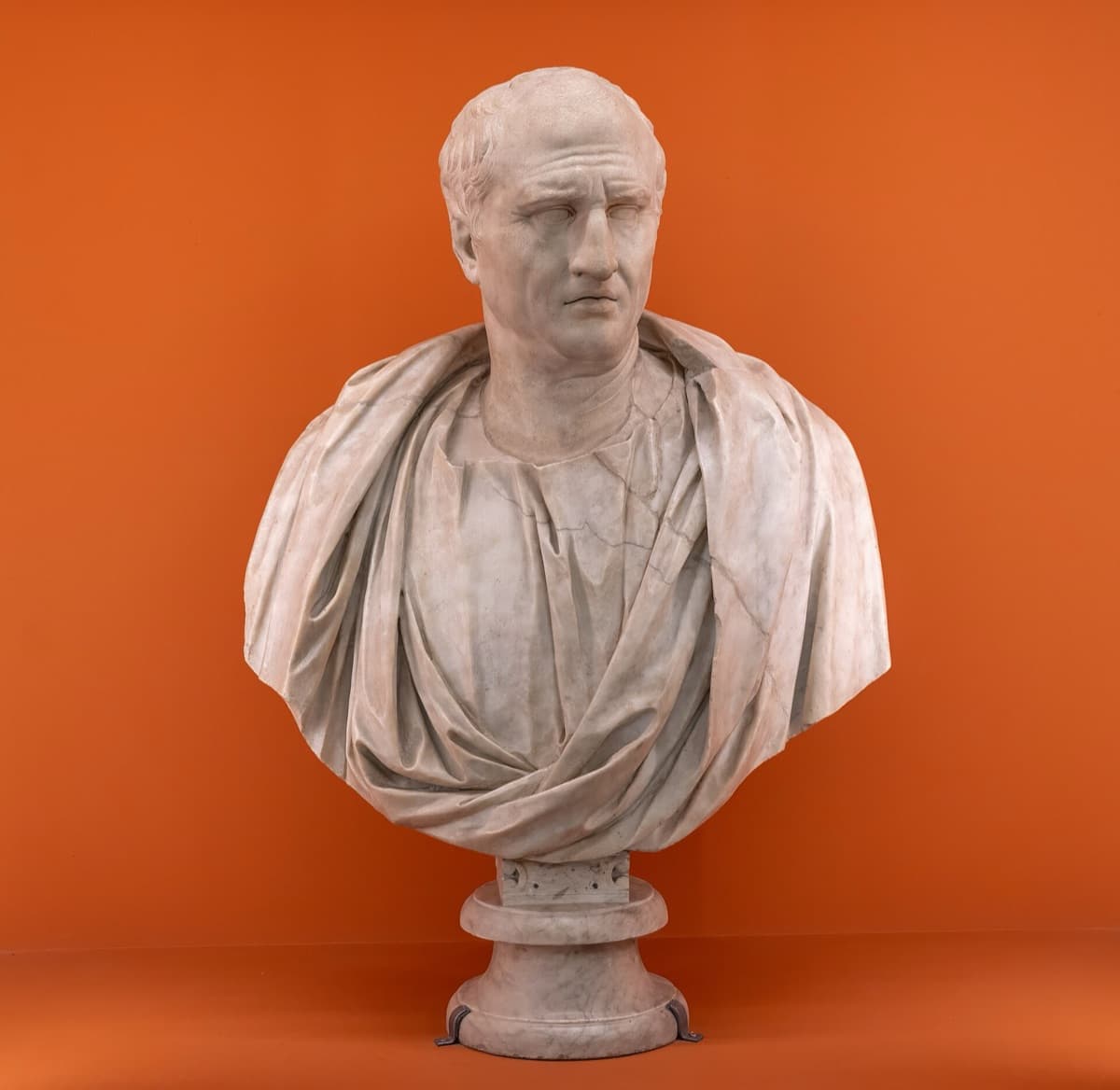
The Romans themselves understood this better than their later imitators. Cicero, no aristocrat by birth, mocked the old families for their invented Trojan ancestors and built a career on being a novus homo, a new man. He would have found the math delightful: two thousand years on, the new man and the patricians share the same descendants, and nobody can tell them apart.
Image credits
- Marble funerary relief with a family portrait (Roman). The Metropolitan Museum of Art, CC0.
- Gregory of Tours, Historia Francorum, BnF Latin 17655, fol. 79v. Bibliothèque nationale de France, Public domain.
- Hans Burgkmair the Elder, Maximilian, from The Genealogy of Emperor Maximilian I. The Metropolitan Museum of Art, CC0.
- Bust of Cicero, Capitoline Museums. Wilfredor, Wikimedia Commons, CC0.
- Diagrams: where the records run out; ancestor slots by generation. White Glove Genealogy, Original.


