
Blog ·
Did ordinary Romans and Greeks marry their cousins?
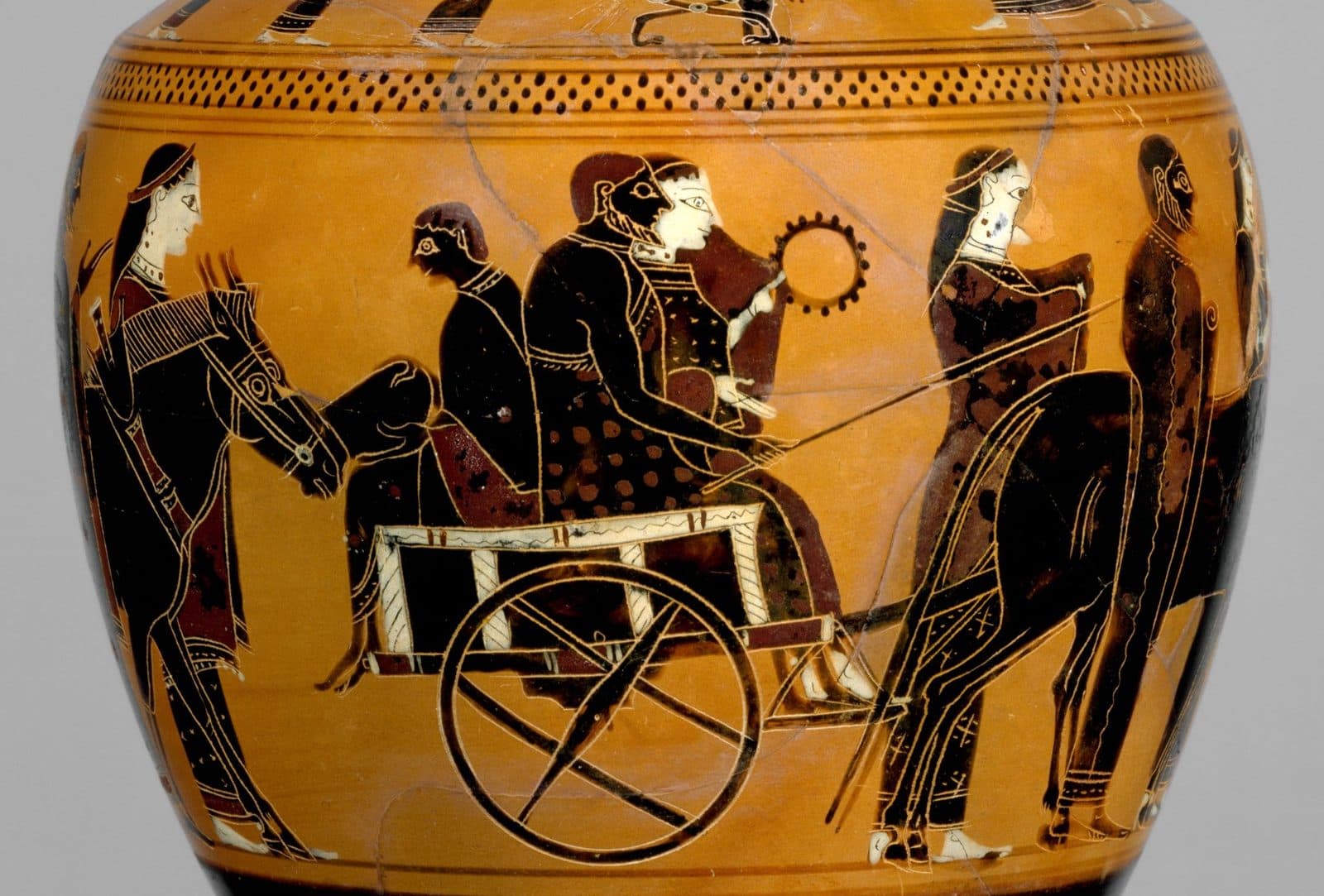
After the article on how many ancestors you actually have, a customer asked a sharp question. That piece argued that for most of the past, people in a village of a few hundred were marrying fourth, fifth, and sixth cousins whether they knew it or not, and that this is the engine of pedigree collapse. Fine, the customer said, but that was medieval Europe. What about Rome and Greece? Everyone knows the powerful families married each other. What about the farmer, the potter, the tenant on somebody else’s olive grove?
It is a better question than it looks, because the answer is not the same for the two civilizations, and because a pair of recent DNA studies has finally let us see what ordinary people did rather than what the law allowed or the aristocracy recorded.
Greece: the cousins were the point
Start with the oldest evidence, which is also the most surprising. In 2023 a team led by the Max Planck Institute for Evolutionary Anthropology in Leipzig published genomes from more than a hundred Bronze Age people across the Aegean, Minoan Crete, the Cyclades, and the Mycenaean mainland, dating from roughly 1800 to 1200 BC. These were not palace burials. Several came from a small hamlet tomb that held a single family across generations, the kind of place that never appears in a written source.
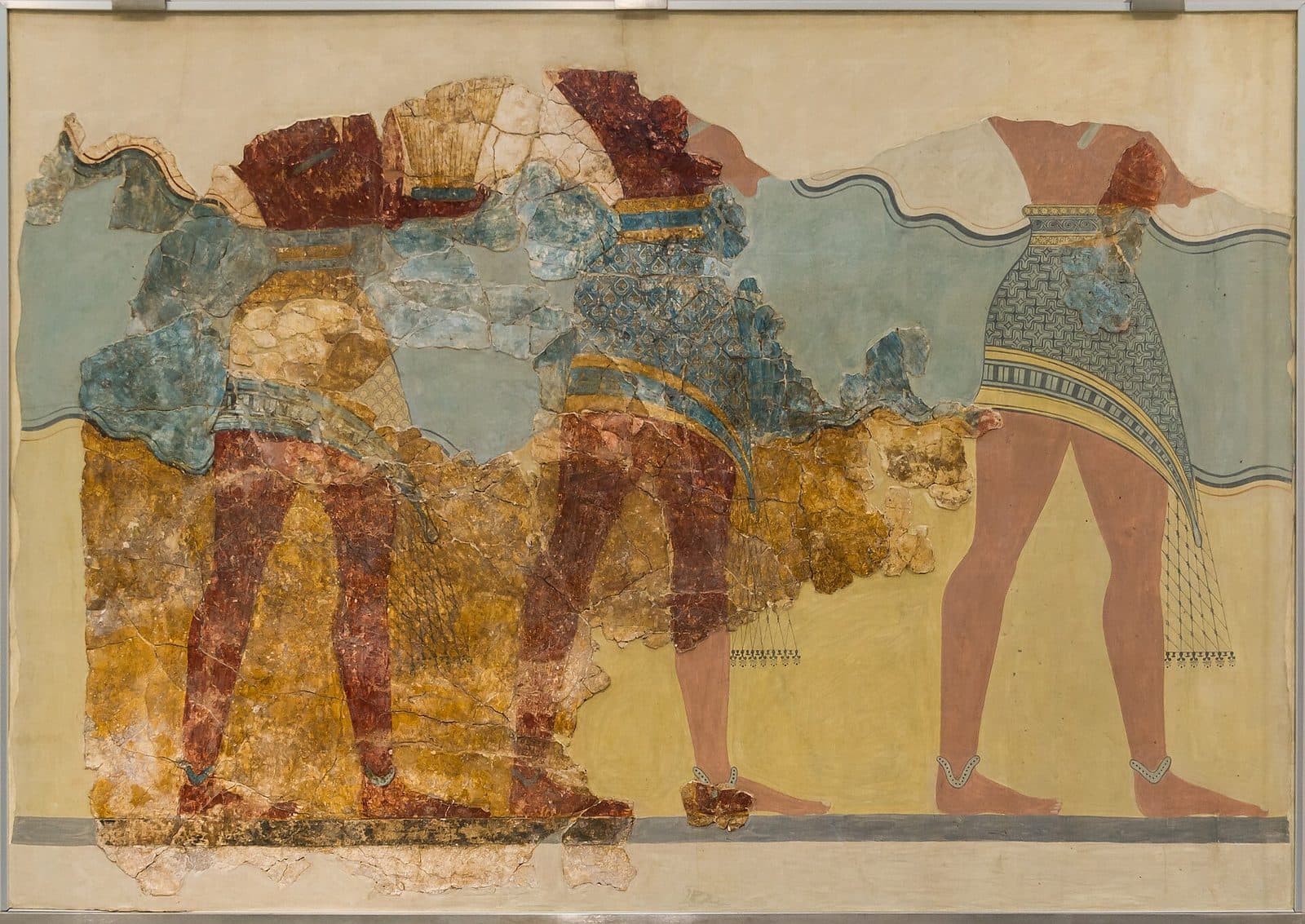
The genomes show that on Crete and the islands about half of all marriages were between first cousins. On the mainland, around a third. The lead archaeologist, Philipp Stockhammer, called it an unwritten rule practiced so consistently it amounted to a strict custom. His team’s explanation is agricultural: olive trees and vineyards take decades to become productive, and a family that split its plots among in-laws every generation would never see the return. Marrying a cousin kept the groves together.
That is the Bronze Age. By the Classical period, Athens had turned the same instinct into statute. Under the rule of the epikleros, a daughter whose father died without sons could not simply inherit and marry whom she liked. She was required to marry her father’s nearest male relative, in a fixed order: his brothers first, then the sons of his sisters, then the grandsons of his uncles, and so on through the paternal kin. A first cousin or an uncle was the usual outcome. The law applied to every citizen class, and it included a sliding scale of dowries so that a poor heiress whose relative declined her would still be provided for. Historians estimate that about one father in seven died without a surviving son, which made the epikleros an ordinary feature of Athenian life rather than an aristocratic curiosity.
Beyond the heiress rule, the Athenian sources show citizens marrying inside their deme, the local district, and inside their kin network as a matter of course. The surviving court speeches, which are our best window on middling families, are full of uncles marrying nieces and cousins marrying cousins, with no sense that anyone thought it remarkable. Sparta and Cretan Gortyn had their own heiress rules with the same logic. Greek law did not bar any blood relationship except the direct line of descent, and even half-siblings who shared only a father could marry.
So for Greece the answer is clear. Ordinary people married cousins, deliberately, in large numbers, over more than a thousand years, and the reason was land.
Rome: legal, tolerated, and mostly avoided
Rome is the surprise. Everything about Roman law suggests cousin marriage should have been common. First-cousin marriage was permitted throughout the Republic and Empire. In AD 49 the emperor Claudius had the senate legalize uncle-niece marriage so that he could marry Agrippina, and ordinary Romans gained the same right. There was no religious prohibition and no recorded social stigma.
Yet when Brent Shaw and Richard Saller examined the attested marriages of the Roman elite in a 1984 study, they found almost none between cousins. The senatorial class, the one group whose marriages we can reconstruct, was strikingly exogamous. Rising families married into established ones to secure position; established families married across to build alliances. Marrying inward gained nothing.
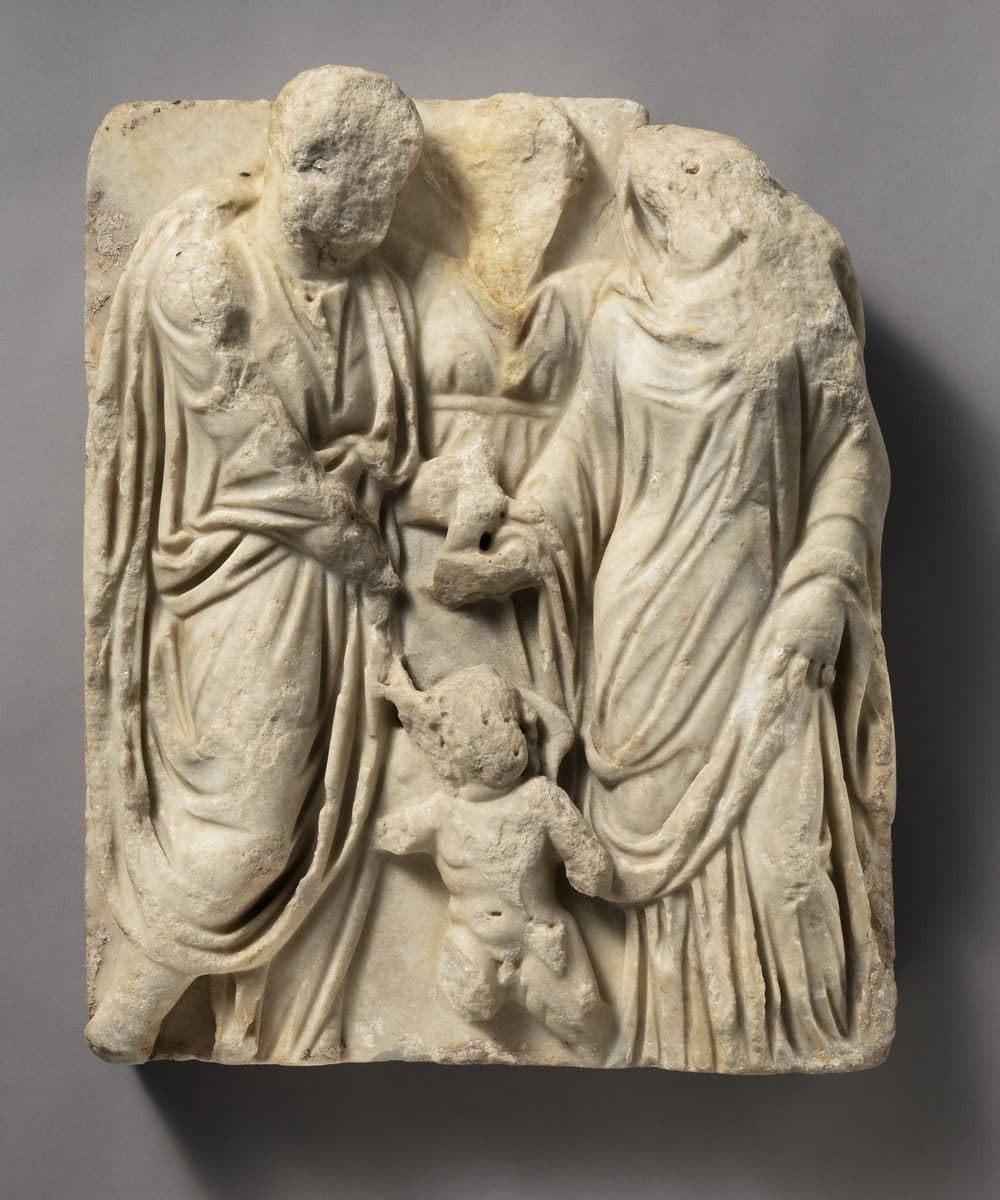
For the mass of Romans the evidence was, until recently, close to silent. Roman funerary inscriptions name spouses but rarely reveal whether they were related, and the one-generation nature of most epitaphs hides cousinhood entirely. Shaw and Saller’s conclusion that the Roman family was nuclear and outward-looking rested on inscriptions from the western provinces, and it was fair to ask whether the same held for a tenant farmer in Campania.
Ancient DNA has now begun to answer that. A 2026 preprint by N. Ezgi Altınışık applies a method based on runs of homozygosity, long stretches of identical DNA inherited from both parents, which reveal whether a person’s parents were close kin. Across the compiled Roman-era genomes, the Italian peninsula shows a clear shift toward outbreeding during the Imperial period. Consanguinity that had been present in Iron Age Italy fell away. The eastern provinces, especially rural Anatolia and the Balkans, show the opposite: tight, enduring endogamous networks, with an Imperial-era homestead at Nevalı Çori standing out as highly inbred.
So an Italian farmer under Augustus was, on the genetic evidence, less likely to have cousin-parents than a Greek villager fifteen centuries earlier. The likely reasons are the same forces that drove down cousin marriage in nineteenth-century Europe: mobility and scale. Rome moved people. Soldiers served far from home and settled in colonies; slaves were brought from everywhere and their freed descendants married locally; roads and shipping connected towns that had been isolated. The marriage pool of an Italian town in the first century AD was simply larger than that of a Mycenaean hamlet, and the arithmetic of the village loosened accordingly.
The exception that proves the pattern: Egypt
One Roman province went the other way, and it is the best-documented population of ordinary people in the entire ancient world. Roman Egypt conducted a census every fourteen years, and several hundred household returns survive on papyrus, listing every resident and their relationship to the head of the household. Keith Hopkins analyzed them in 1980 and found that in the Fayum district 15 to 20 percent of recorded marriages were between full or half siblings. Later work by Roger Bagnall and Bruce Frier confirmed the scale. These were not priests or nobles. They were weavers, farmers, and small landholders.
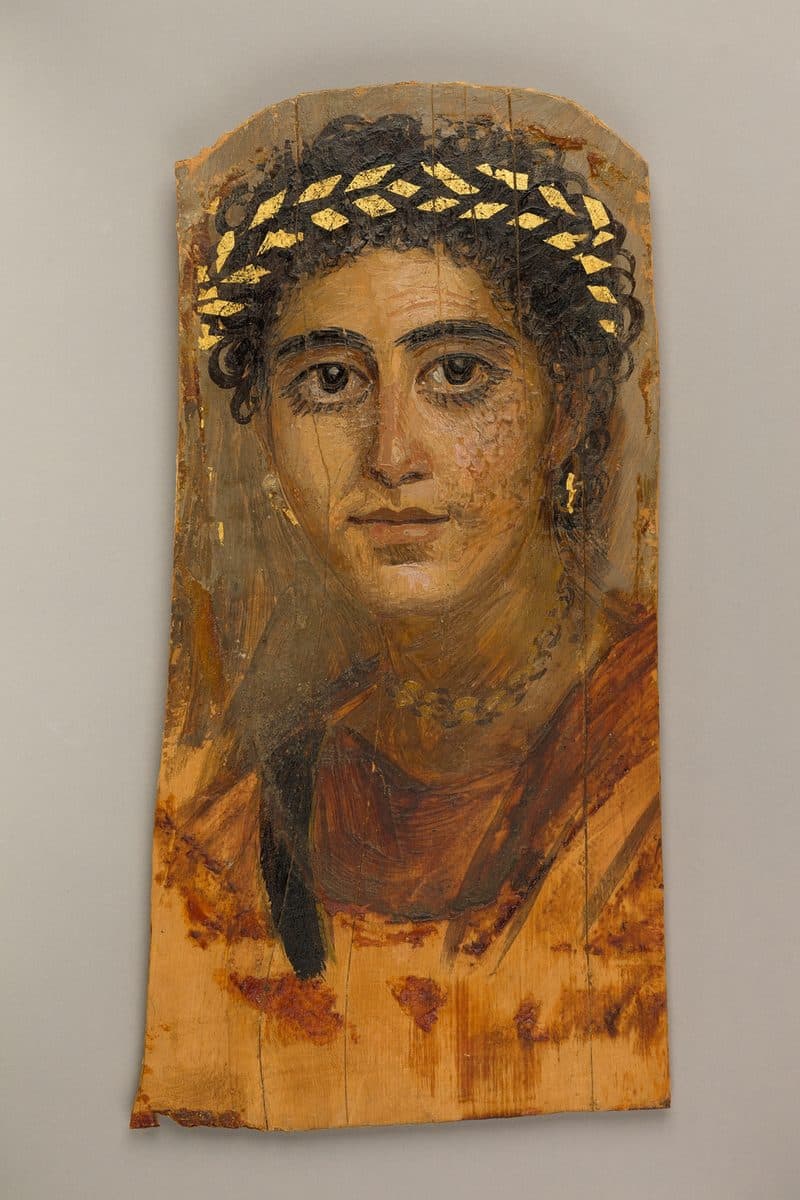
The finding has been challenged. Sabine Huebner argued in 2007 that many of these “brother-sister” unions were disguised adoptions, a family with no son adopting a son-in-law and then recording him as a brother, which saved a dowry and kept the family name. Most specialists find that the household sizes and naming patterns do not fit the adoption model, and contemporary Roman writers remarked on Egyptian sibling marriage as a known local peculiarity, which suggests they were describing something real. Either way, the Egyptian census shows a population of ordinary people practicing close-kin marriage at a rate that would have shocked an Italian of the same century.
What changed, and when
The Roman tolerance ended with the Christian emperors. Constantius II banned uncle-niece marriage in 342. Theodosius I banned first-cousin marriage in 384 or 385, and although his son Arcadius relaxed the rule in 405, the Church had found its direction. Over the following centuries the prohibited degrees expanded until, by the eleventh century, the Western Church forbade marriage out to sixth cousins. That is the rule, unenforceable in any real village, that the earlier article in this series describes being cut back to third cousins at the Fourth Lateran Council in 1215.
Seen in sequence, the story runs in a loop. Bronze Age and Classical Greeks married cousins by choice to keep land together. Imperial Italy, mobile and urban, drifted away from it without any law requiring the change. Egypt and the rural East kept marrying close kin. The Church then imposed a prohibition on everyone, the prohibition collided with the arithmetic of the village, and for the next eight hundred years medieval Europeans married fourth and fifth cousins because, as the earlier article put it, there was no one else to marry.
The answer for the customer
To the question as asked: yes, ordinary Greeks married their cousins, on purpose, at rates we can now measure. Ordinary Romans in Italy mostly did not, despite being free to, because the empire enlarged the pool of people they could meet. Ordinary Egyptians under Roman rule went further than either and married their siblings. The powerful families in all three places were doing roughly what their neighbors were doing, only with more paperwork.
And underneath all of it, the village math never stopped running. Even an exogamous Italian farmer choosing a bride from the next valley was marrying a distant cousin, because in a world of small, slow-moving populations, everyone within a day’s walk shared ancestors a few generations back. The Greeks simply made it official.
Sources
- Skourtanioti, E. et al. (2023). “Ancient DNA reveals admixture history and endogamy in the prehistoric Aegean.” Nature Ecology & Evolution 7: 290–303. Summary with author interviews.
- LMU Munich press release on the Aegean study, “Marriage in Minoan Crete.”
- Epikleros and the Athenian heiress rules.
- Marriage in ancient Greece (consanguinity, heiress marriage in Athens, Sparta, and Gortyn).
- Shaw, B. D. and Saller, R. P. (1984). “Close-Kin Marriage in Roman Society?” Man 19(3): 432–444. Discussed in the context of Henrich’s The WEIRDest People in the World.
- Altınışık, N. E. (2026). “Consanguinity and Social Structure in the Roman World: A Diachronic Genomic Analysis.” Research Square preprint.
- Corbier, M., on cousin marriage in Roman Africa, in George, M. (ed.), The Roman Family in the Empire (Oxford, 2005). Review.
- Hopkins, K. (1980). “Brother-Sister Marriage in Roman Egypt.” Comparative Studies in Society and History 22(3). Overview of the census evidence and the Huebner adoption debate.
- Bagnall, R. S. and Frier, B. W. (1994). The Demography of Roman Egypt. Cambridge University Press. Print reference.
- Consanguinity in Roman and canon law, including the imperial bans of 342 and 384.
Image credits
- Amasis Painter, black-figure lekythos with a wedding procession (c. 550–530 BC), detail. Metropolitan Museum of Art, New York (56.11.1), CC0.
- Procession Fresco, Knossos. Heraklion Archaeological Museum; photograph by Jebulon, CC0.
- Marble sarcophagus fragment with a marriage scene (early 3rd century AD). Metropolitan Museum of Art, New York, CC0.
- Portrait of a young woman in red (c. AD 90–120). Metropolitan Museum of Art, New York (09.181.6), CC0.


