
Blog ·
When the records burned
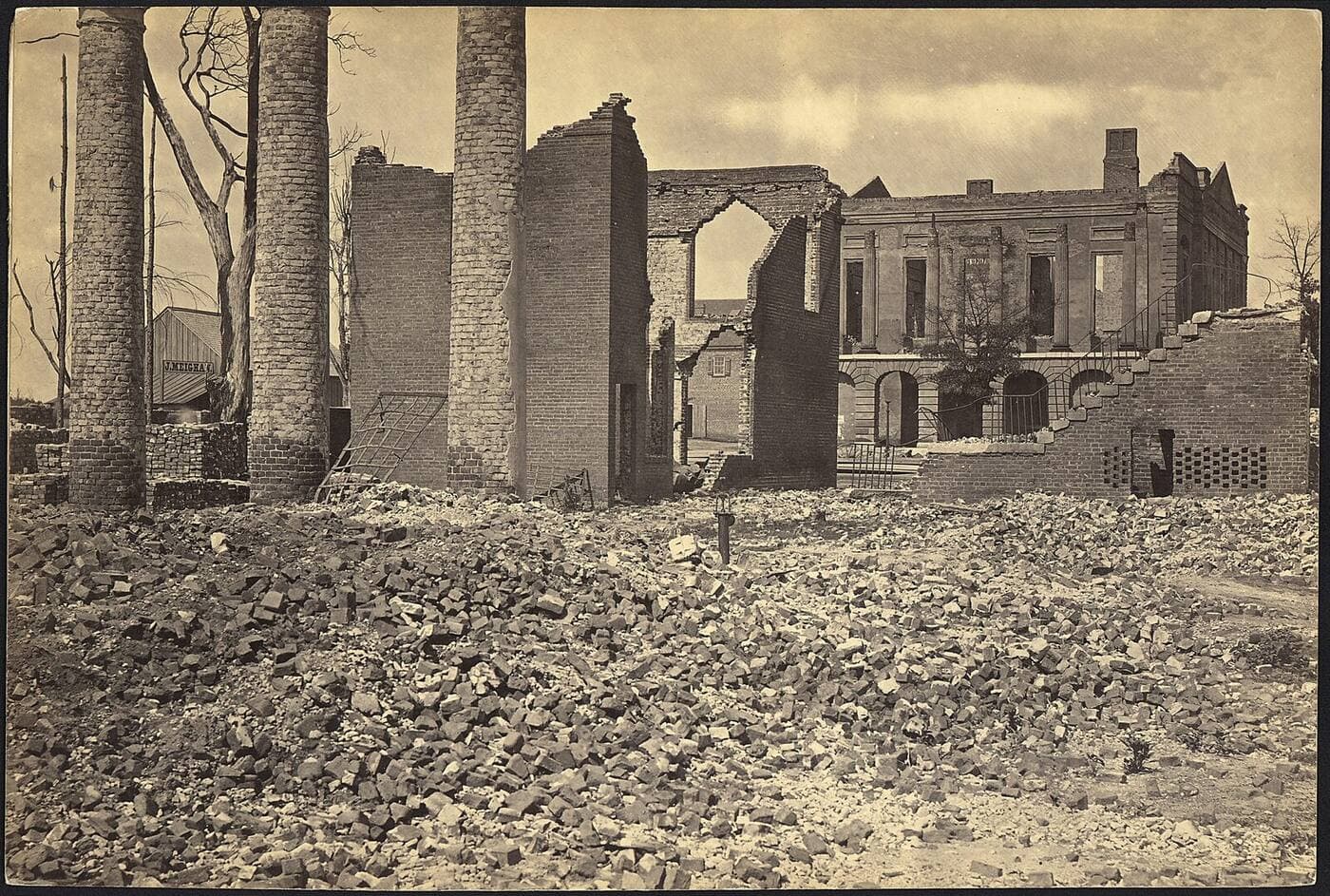
“The courthouse burned” is the most common brick wall in American genealogy, and the most misunderstood. People hear it and stop. But a fire destroys one set of records, not a person’s life, and the same facts were usually written down somewhere else for a different reason. My own tree has three of these walls: the St. Charles Parish church registers for 1765 to 1895, burned; the Washington Parish, Louisiana, probate records before 1897, destroyed by fire; and the first succession volume of Tangipahoa Parish, which survived but was never filmed. Here is how the records got around each one.
Case A: a farmer without a succession
John McElveen was born in South Carolina about 1780 and died in Washington Parish, Louisiana, in the 1850s. He is my 4×-great-grandfather. In a civil-law state like Louisiana, his succession would normally list his heirs, settle his property and, with luck, name where he came from. Washington Parish’s probate records before 1897 burned, so that document is almost certainly gone. What follows is what we used instead.
| Record | What it gives | Kind of source |
|---|---|---|
| 1850 census, Washington Parish | John, 70, farmer, born S.C., with Nancy 18, Henry 17, Harvey 12, Ira 8 | Original, image read |
| 1860 census, Ward 2 | John, 77, born S.C., with Nancy, Ira N., Samuel, Serena | Original, image read |
| Land patents, 10 Nov 1840 | John McElveen “of Pike County Mississippi”, 40 acres in section 28; Moses McElveen, same day, same township, sections 21–22 | Original (GLO images) |
| Mount Zion Baptist Church minutes | Charter member, 28 Jul 1838; marked “deceased” on the male roll of 15 Aug 1860 | Typescript copy (derivative) |
| Estate of William McElveen Sr., Sumter, S.C., 1837 | Heirs include a John and a Moses; the sheriff did not serve them in Oct 1837 | Original court papers |
The censuses give his age, birthplace and household. The land office gives a precise place, the state line between Pike County, Mississippi, and Washington Parish, and a companion: John and Moses McElveen, both “of Pike County”, were patented adjoining land on the same day in November 1840. The church minutes, copied out in typescript decades ago from a minute book, show him among the twelve men who organized Mount Zion Baptist Church in 1838, and then, on the male roll of 15 August 1860, the one word “deceased”. He was alive for the census that July. So he died between July and mid-August 1860, which is tighter than most successions would have given.
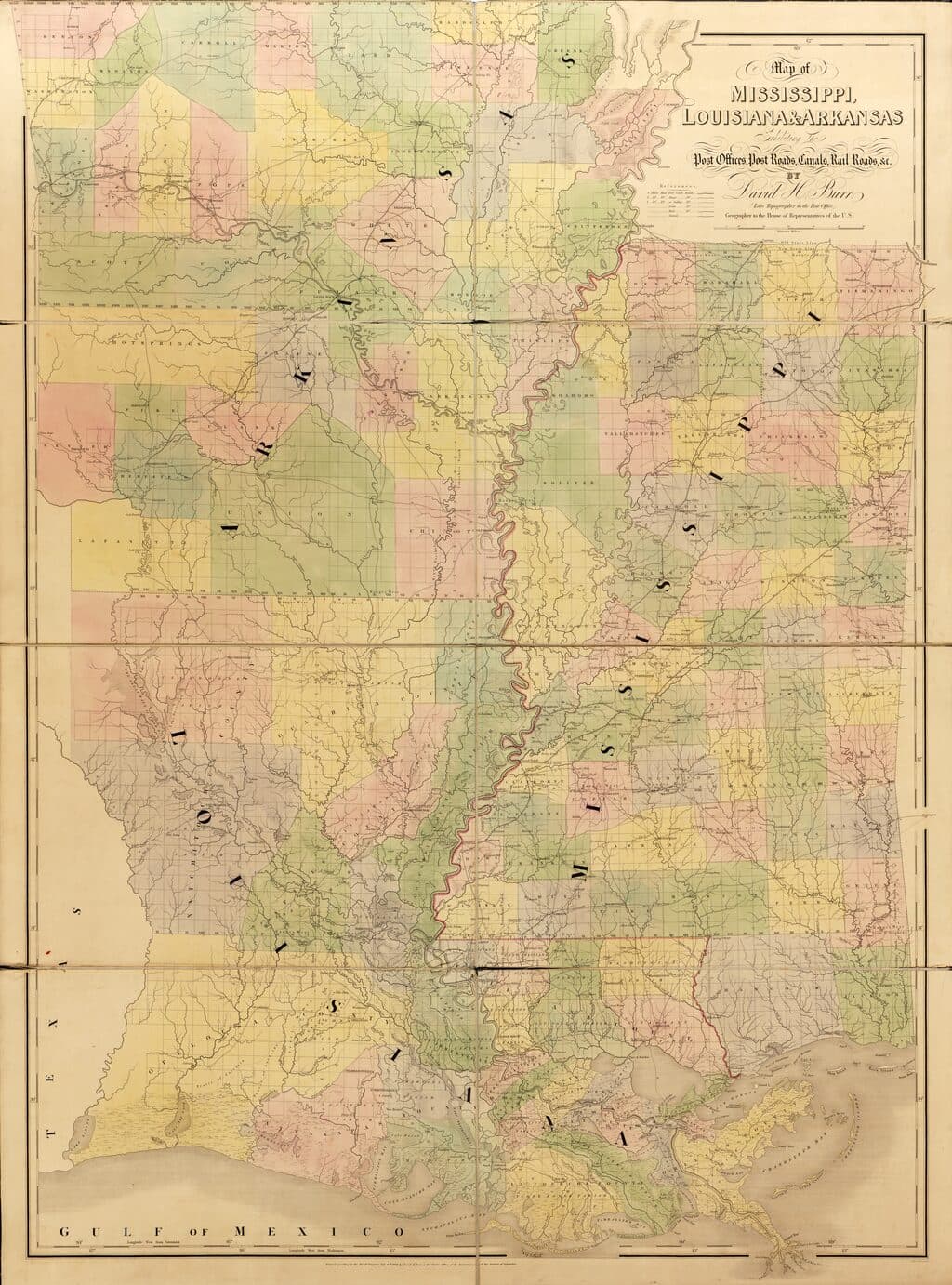
The South Carolina estate is where it gets interesting and where I have to be careful. William McElveen Sr. of Sumter District died in 1837, and his estate papers name a John and a Moses among his heirs. The sheriff served the heirs living in Sumter that October and recorded no service on John, Moses and a few others, which suggests they lived out of the district. A John and a Moses, absent from South Carolina in 1837, turning up side by side on the Louisiana line in 1840, is suggestive. It is not a document naming John’s father. And in 1820 there were two John McElveens of the right age in Sumter, so even the starting point is ambiguous. On 17 October 2026 I downgraded the link from probable to possible. The tree also gave him a middle initial, “D.”, that no record supports; it was removed.
Case B: the St. Charles fire
The St. Charles Parish church registers from 1765 to 1895 are gone, and with them the baptisms of two of my ancestors: Marianne Perret, born about 1782, and Pouponne Darensbourg, born before about 1785. For both, the tree had dates and parents, all unsourced, and for one of them the parents were wrong.
Marianne Perret’s parents are now proven, without her baptism, by three independent records. Her 1804 marriage at Edgard names her “hija de Alphonso Perret y Rosalia Geneveva de St. Amant”. Her burial on 10 May 1810, aged 28, names “fille d’Alphonse Perrette et de Rosalie St Aman”. And her father’s will, written in New Orleans in January 1818, speaks of “feue dame Marianne Perret ma fille légitime”, the late Mrs Marianne Perret my legitimate daughter, wife of Benjamin Borne. Three records, three different clerks, three different years, one set of parents. The fire does not matter.
Pouponne Darensbourg is the better lesson, because the tree had given her parents who could not be hers: Hubert D’Arensbourg, born 1783, and Pouponne Perret, born 1789. Pouponne’s own son was born in 1804. Hubert was her brother; he turns up as her co-heir in 1845. Her real parents, Charles Darensbourg and Françoise Lavergne, are named as the maternal grandparents in the baptisms of her children Pedro and Carlota at the St. Louis Cathedral in New Orleans in 1804 and 1806. When a person’s own baptism is gone, look at their children’s. A grandparent named at the font is as good as a parent named at the font, and the New Orleans registers did not burn.
Case C: the film nobody indexed
Benjamin LeBorne, born 1779, the father of the Antoine Benjamin whose succession I will come to in a later post, had no known death. FamilySearch said 1829; the tree had nothing better. Then his son’s 1830 marriage contract turned up as an exhibit in a lawsuit, and it described the father on 7 July 1830 as “Mr. Antoine Benjamin Borne demeurant en la paroisse Ascension”, living in Ascension Parish. So not 1829. Ascension’s probate volumes for the period are on FamilySearch but restricted, and unindexed everywhere. They are, however, browsable on Ancestry, page by page, and on 17 October 2026 we read them that way. On page 110 of Inventories and Sales 1825–1832 is an inventory taken at Donaldsonville on 19 November 1831 of the community between “Dame Rose Aimée Laurent, Veuve Antoine Benjamin Borne” and “son défunt mari”. Veuve: widow. He died between 7 July 1830 and 7 November 1831, the date of the decree ordering the inventory.
The estate was small, $800, and the inventory lists two enslaved people among its contents, with furniture and tools. I have the page and I have not yet transcribed their names; that is on the list, because they belong in this family’s record as people, not as a line item.
The method
When a record set is gone, ask what other institution had a reason to write the same fact down. The list is longer than people think:
- Census. Age, birthplace, household, every ten years from 1790.
- Land. Federal patents and parish deeds name residences, neighbours and sometimes heirs; the General Land Office images are free online.
- Church minutes. Baptist and other congregational churches kept membership rolls that record arrivals, dismissals and deaths.
- The estates of parents and siblings. A sibling’s succession names the siblings; a parent’s names the children, wherever they have moved to.
- Children’s sacramental records. Baptisms name grandparents; marriages name parents; burials name spouses.
- Newspapers. Succession notices, sheriff’s sales and insolvencies were printed, and the papers survived where the courthouse did not.
- Unindexed films. If the volume exists, read it. Restricted on one site often means browsable on another.
And grade what you find. The Mount Zion minutes are a typescript, a copy of a copy, which makes them a derivative source: good enough to narrow a death to five weeks, not good enough to carry a parentage on their own. The Ascension inventory is an original court record and direct evidence of death: strong. A substitute record is not a lesser record. It is just a record that has to be read for what it is, which is the whole of the surname problem and the DNA problem in a different coat.
What the papers prove
- John McElveen’s 1850 and 1860 households in Washington Parish, and his death between July and 15 August 1860.
- John and Moses McElveen, both “of Pike County Mississippi”, patented adjoining land on 10 November 1840.
- Marianne Perret’s parents, Alphonse Perret and Rosalie Geneviève Daspit St. Amant, by marriage, burial and will.
- Pouponne Darensbourg’s parents, Charles Darensbourg and Françoise Lavergne, by her children’s baptisms.
- Benjamin LeBorne died between 7 July 1830 and 7 November 1831.
What isn’t proven yet
- John McElveen’s father. William McElveen Sr. of Sumter is possible, no more.
- That John and Moses McElveen were brothers.
- Where Benjamin LeBorne is buried; the tree’s “Edgard” has no source.
Sources
- 1850 U.S. census, Washington Parish, Louisiana, population schedule, John McElveen household; 1860 U.S. census, Washington Parish, Ward 2, P.O. Roberts, dwelling 320; images, Ancestry and FamilySearch.
- Bureau of Land Management, General Land Office Records, Washington (Mississippi) land office, certificates 5376 (John McElveen) and 4211 (Moses McElveen), 10 Nov 1840; glorecords.blm.gov.
- “Mount Zion Baptist Church, Pike County, Mississippi, copied from the church minutes”, typescript; FamilySearch, Mississippi Religious Records, image 209 of 580. A derivative source.
- Estate of William McElveen Sr., Sumter District, South Carolina, petition and summons, 1837; images, FamilySearch. William McElveen, Revolutionary War pension file S.21880, NARA M804.
- St. John the Baptist Catholic Church (Edgard), Marriages, 1 May 1804 (M1, 120v–121); Funerals 1772–1815 (F1), 103v–104, burial of Marianne Perrette, 10 May 1810; Archdiocese of New Orleans. Will of Alphonse Perret, 21 Jan 1818, Orleans Parish Will Book 3.
- Sacramental Records of the Roman Catholic Church of the Archdiocese of New Orleans, vol. 8, SLC B17, 75 and 128 (baptisms of Pedro and Carlota Latour, 1804, 1806).
- Ascension Parish, Louisiana, Court of Probates, Inventories and Sales 1825–1832, pp. 110–111, inventory of 19 Nov 1831; images, Ancestry collection 9067, image 007669779_00457; FHL DGS 7669779.
- Full citations are in the research files for John McElveen, William McElveen Sr., Marianne Perret, Pouponne Darensbourg and Benjamin LeBorne.
Image credits
- George N. Barnard, Ruins in Columbia, South Carolina (1865), albumen print. U.S. National Archives and Records Administration, via Wikimedia Commons, Public domain.
- James W. Rosenthal, St. Matthew Baptist Church, Melrose, Natchitoches Parish, Louisiana (HABS LA-1340-3), 2004. Historic American Buildings Survey, Library of Congress, via Wikimedia Commons, Public domain (U.S. government work).
- David H. Burr, Map of Mississippi, Louisiana & Arkansas Exhibiting the Post Offices, Post Roads, Canals, Rail Roads &c. (1839). Library of Congress / World Digital Library, via Wikimedia Commons, Public domain.